Plaza Branch and Central Library will open late at 11 a.m. on Saturday, Oct. 17 due to the Kansas City Marathon.
This article first ran in The Kansas City Star on July 26, 2026.
Journalist Pam Colloff’s debut book is set in a world where children are polygraphed, women lose their dignity and their savings, bad guys walk free, and innocent men are queued up on death row.
But the characters don’t operate in a fictional dystopian society, they’re right here with the rest of us. Colloff’s business is the truth; she’s an investigative criminal justice reporter for The New York Times Magazine and ProPublica.
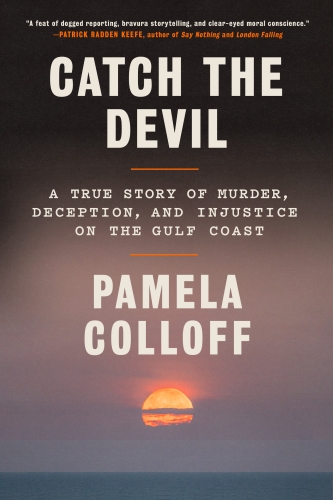
Catch the Devil is well-researched nonfiction about what happens — and who pays — when an ordinary con artist is empowered by the justice system. It’s also the current KC Pop-Up Book Group pick.
“I had been looking, probably for about 10 years, for the right story to tell about jailhouse snitches,” Colloff said.
She finally found a convict who could carry the narrative: a Texan named Paul Skalnik.
Colloff recalled reading about him and thinking, “This is nuts. It felt like a very epic, big tale that was worth digging into.”
From the 1970s through 1990s, from Texas to Florida, Skalnik conned countless people out of countless dollars and married multiple women — sometimes simultaneously — assaulting young women along the way.
Again and again, the law caught up with him. But eventually he learned how to con his way out of incarceration, so his stints behind bars never lasted as long as his sentences.
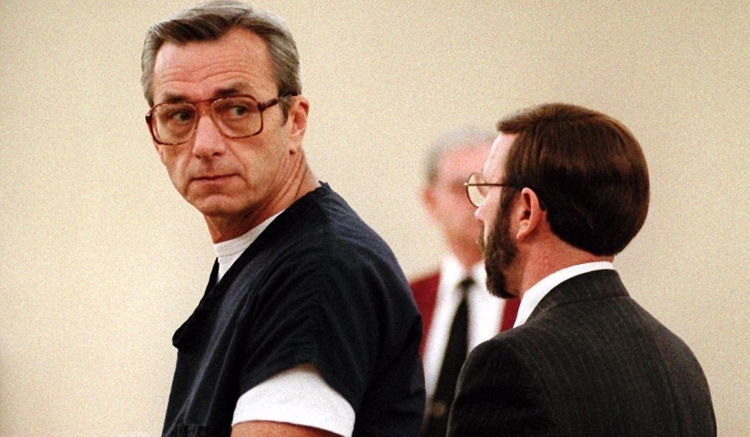
In the hands of another storyteller, this might elicit a “so what?” But Colloff pairs Skalnik’s depravity with details about a man named Jim Dailey.
By most accounts, Dailey was — and still is — a good-natured person hardened by his years in Vietnam. Though most of the book’s action takes place in Texas and Florida, Dailey is a Manhattan, Kan. native and spent time at K-State just before enlisting in the Army.
Ultimately, Dailey, in the grip of addiction and newly estranged from his wife and children, was in the wrong place at the wrong time with the wrong people. His transgressions stopped there.
Still, he’s been on Florida’s death row for 39 years for murdering a 14-year-old girl.
It’s a crime Dailey didn’t commit, even according to an affidavit signed by the murderer, a man he met at a bar in Olathe in the early 1980s.
Dailey and those who would like to see him free, including the Innocence Project of Florida, have exhausted his appeals, some of which were used up when the murderer agreed to testify to Dailey’s innocence and got cold feet at the last minute.
Skalnik’s get out-of-jail game was part of what secured Dailey’s spot on death row in 1987.
“Whenever there was a jailhouse informant involved, it was a bad case,” Colloff explained. “That doesn’t mean that the defendant was innocent. It just means that it was a screwed-up case. It meant they didn’t have quite enough evidence, or maybe there was a lot of pressure on prosecutors.”
Dailey’s case included not one jailhouse informant, but three.
Colloff wrote: “No one realized at the time the full measure of his influence, but Skalnik had become one of the most prolific, and most effective, jailhouse witnesses in American history.”
By Skalnik’s own account in a 1984 letter he wrote to a Florida senator to try to win an early release, he helped put 34 people in prison, including four on death row.
Dailey was aware that law enforcement was looking for an inmate to testify against him and knew better than to talk to Skalnik. The cellblock configuration, which Dailey drew for his lawyer, even made it so that if the two had spoken, it would have been from a distance and in view of plenty of witnesses. Colloff wrote that about a quarter of states are trying to minimize the use of jailhouse witnesses.
Studies by the National Registry of Exonerations and Northwestern Law School’s Center on Wrongful Convictions leave little doubt that when someone has nothing to lose for a possibly great payoff, it’s unlikely that their information will be fully truthful.
But, as it is, once the jury accepted Skalnik’s testimony as legitimate, it became almost impossible to undo the harm it caused.
“Why is it that in the law the concept of finality can be more important than making sure you got it right?” Colloff asked. “And why is it not an option, when you know someone was a serial jailhouse informant who lied repeatedly and perjured himself repeatedly on the stand, to go back and look at those cases?”
The engine that drives Catch the Devil forward is the tension, a lot of it fueled by the agonizing difference in justice for the men she’s paired. That holds right until the end. Skalnik died on March 10, 2020, escaping one day before the World Health Organization declared a global pandemic.
Dailey turned 80 in June and is still on death row.

Meet the author
Pamela Colloff discusses Catch the Devil with Christopher Leonard at 6 p.m. on Thursday, Sept. 3, at the Plaza Branch, 4801 Main St. It’s free with RSVP at KCLibrary.org/events.
Join the KC Pop-up Book Group
The Kansas City Star partners with the Kansas City Public Library to present a book-of-the-moment selection. We invite the community to read along. Just before the author’s event, Kaite Mediatore Stover, the Library’s director of readers’ services, leads a discussion of Pamela Colloff’s Catch the Devil at 5 p.m. on Thursday, Sept. 3, at the library’s Plaza Branch, 4801 Main St. mail Stover at kaitestover@kclibrary.org to join or RSVP here.

