Plaza Branch and Central Library will open late at 11 a.m. on Saturday, Oct. 17 due to the Kansas City Marathon.
In recent decades, foraging for wild mushrooms has gained popularity across the country, especially in the spring and fall, though edible varieties grow most of the year.
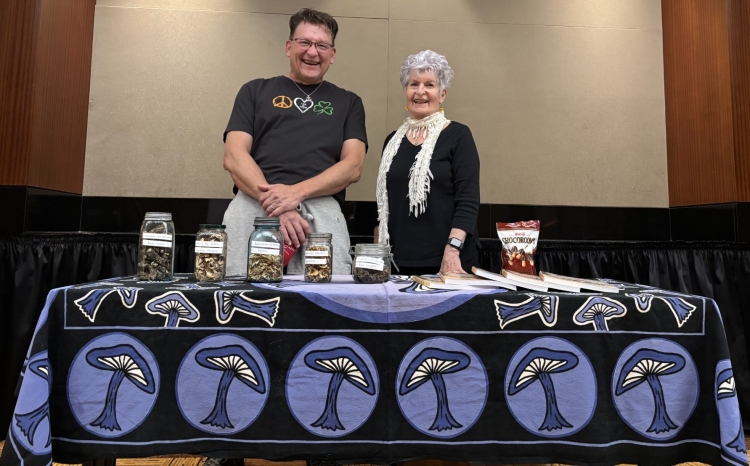
“Mushrooms are mushrooming,” says Maxine Stone, the author of Missouri’s Wild Mushrooms and the past president of the Missouri Mycological Society.
It’s April, and the perfect time to learn more about the dos and don’ts of mushroom hunting, including when, where, and how to begin.
Stone and Russ Davenport, a member of the Kaw Valley Mycological Society, spelled it all out during the “Mushroom Hunting 101” event in early April.
What to avoid
Safety is a priority, so it’s good to know the types of mushrooms that are edible and the ones not to pick.
According to Stone, very few Missouri mushrooms are deadly, but it’s critical to avoid two.
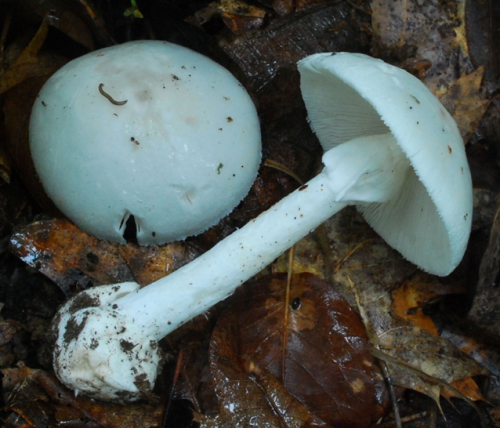
Destroying angel, she says, is very common; they can be found just about anywhere: in the woods, in your backyard, in city parks.
“They are pure white, pure white,” Stone says. “Don’t eat a pure, white mushroom, or else you’ll probably lose your liver. And I don’t think you want to do that.”
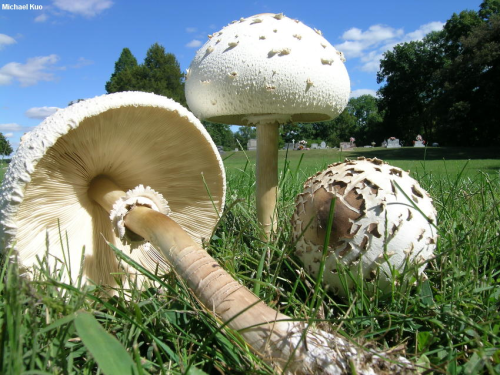
Another mushroom to keep at arm’s length is the green-spored lepiota, which pops up after rain from summer into fall; they’re not pure white, but more of a cream color.
“They grow in a fairy rings,” she says, “which is a pretty magical thing.”
But looks can be deceiving. They’re not deadly but will cause severe stomach issues if you eat them, Stone says, as “your body is trying to purge.”
Bring the essentials
Russ Davenport refers to his foraging backpack and his "bag of goodies.” It’s what he carries when he’s foraging near the Flint Hills in Kansas.
Some people use a fishnet, but Davenport says he prefers lunch-sized paper bags — the mushrooms will get “gooey” in a plastic bag — for harvesting mushrooms.
“The idea is you’re spreading spores as you’re carrying your bag around,” he says. “These let the morels breathe.”
For Davenport, comfortable shoes are important, and a big hat with a brim, or even a baseball hat, for protection from tree limbs, which can poke an eye or an ear.
“When you’re hunting,” he says, “you’re not looking where you’re going sometimes.”
Among Davenport’s other suggestions are zipping car keys into a backpack pocket to avoid losing them in the woods and carrying a flashlight or headlamp for when the hunt goes longer than expected.
And of course, spiders, ticks, and mosquitoes live outside…
Davenport doesn’t use insect repellent, wears shorts, and just checks carefully for ticks after foraging. But Stone disagrees.
“Always wear long pants,” she says, “and a high boot if you have one. And spray with DEET and permethrin.”
Know where to look for morels
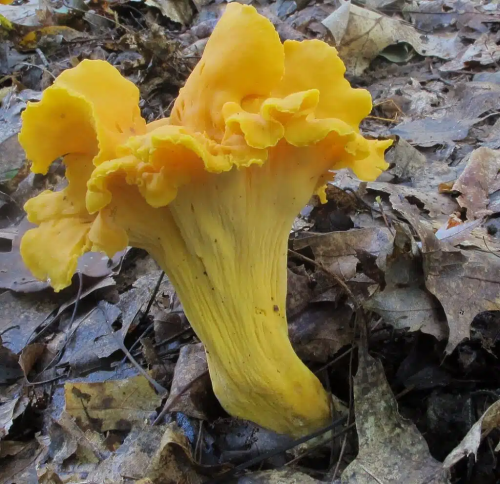
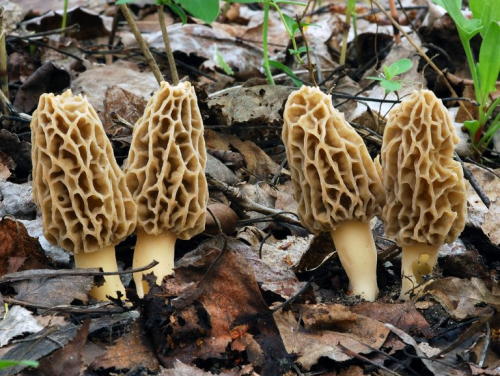
Foodies and nature enthusiasts alike wander the woods from early March through late May, seeking morels. These conical, honeycombed mushrooms are tasty, with an earthy, nutty flavor.
But morels can also be difficult to find, unless you know where to look.
“They come up where they come up,” Stone says.
Her hints on where to forage for these mushrooms include looking for dying elms, ashes, sycamores, and cottonwoods.
Once you’ve found some morels, Davenport suggests picking them by hand, pinching them close to the base with your fingers, or cutting them with a knife.
“The entire mushroom tastes the same, so get as much as you can,” he says. “But you don’t want the part in the dirt.”
Then, brush off the mushroom to clean it and pop it into your paper bag.
Go with a group
Before you set off on your foray, Stone and Davenport both recommend tapping someone with experience or joining an organized group, especially if you’re a first timer.
“It’s great to contact either of these (mycological) societies we’re talking about,” says Davenport. “They will typically have five or six forays a year and take you to a pretty good spot.”
So, grab a friend — or make a new one — at a mushroom foray near you in Missouri or in Kansas.