Plaza Branch and Central Library will open late at 11 a.m. on Saturday, Oct. 17 due to the Kansas City Marathon.
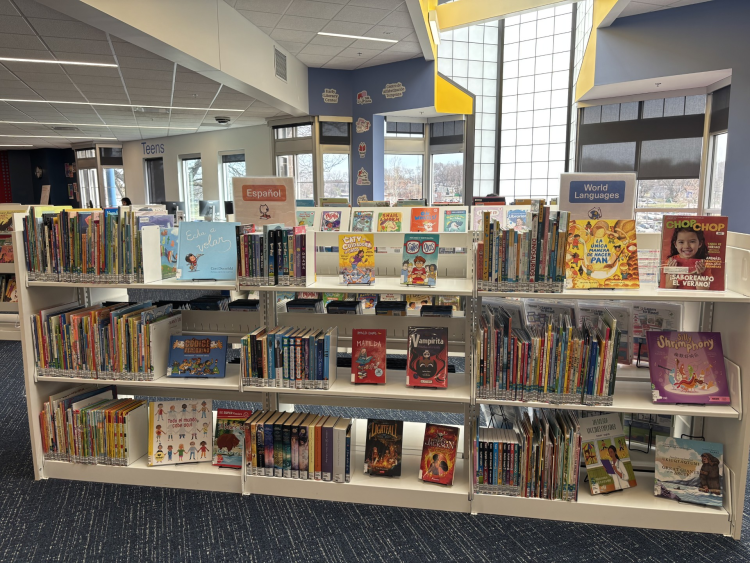
The Library serves Kansas City’s Spanish-speaking population with a growing list of services and resources. Some of those resources, like the Refugee & Immigrant Services & Empowerment (RISE) program at the North-East Branch, are well-established; others are recent additions, like the World Languages Collection.
Removing barriers to access for all community members is at the top of librarians’ minds.
“We want to focus on those barriers we can work on removing,” says Ruiz Branch Manager Jimmy Thomas. “It's always important to reach out to underserved populations and make sure that they are benefiting, because they're often the ones who need the resources the most.”
The Ruiz Branch serves the Westside, one of the oldest neighborhoods in Kansas City. Some of its first residents were Mexican immigrants who moved to the area over 100 years ago to work on the railroad.
Thomas says that the city’s newest immigrants are often uncertain about using a public library. He recently helped a patron set up an online library account.
“And he kept being like, ‘This is free?’” Thomas recalls. “He was very confused that the services we offer are free, because in most countries, a free public library isn't a thing.”
In addition to an extensive collection of Spanish-language books, the Trails West Branch offers passport services in Spanish, and the Ruiz Branch offers both passport and notary services in Spanish.
Ruiz also regularly offers a conversational Spanish club for those who wish to learn Spanish.
Mayra Jimenez, the assistant branch manager at North-East, also hears from patrons who are delighted to learn that the Library is free.
“They think it's like a bookstore, because that's what libraries are called in other countries,” Jiminez says. “But biblioteca is free, so we have run into that several times. And we've had patrons come in and grab some books, and they're like, ‘Oh, can we take these? Or do we have to pay for them?’ We explain that it's free if they have a library card.”
Since Jimenez began at the North-East Branch in July, she’s looked for ways to add more resources and programming in Spanish.
She recently started a Spanish book club, which met for the first time at the end of April. The group read Las Madres by Esmeralda Santiago.
Both the North-East and the Central locations offer regular storytimes in Spanish.
North-East also offers a monthly loteria night.
At all branches and online, patrons can find informational sheets in both Spanish and English about area resources that will help them with many challenging situations:
• Senior resources
• Street Sheet - community resources
• LGBTQ+ resources
• Digital resources
Online services reach an even wider audience.
PressReader offers unlimited access to over 6,000+ newspapers and magazines from around the world, in more than 60 languages.
And just added to the Library’s menu of streaming services free with a Library card — alongside Kanopy and several others — is Bibliotele, a streaming service just for Spanish speakers and those who wish to learn.
Virtual Resources Library Diana Platt was instrumental in bringing the service to patrons; until now, the Lawrence Public Library was the only one in the area that offered it.
“We have a pretty significant population of Spanish speakers in Kansas City, and so it's really lovely to be able to give them something that is designed with them in mind,” Platt explains.
The service includes movies originally produced in Spanish as well as some produced in English that are dubbed or subtitled in Spanish. Platt says that much of the original Spanish content was created in partnership with Univision.
Another recent addition is multilingual scanners at every location. With the touch of a button, a user can select their preferred language to see instructions for scanning documents or images to the printer, a thumb drive, or an email account.
“These resources are so important to making the Library feel like a safe and welcoming space for all,” says Jimenez. “This helps improve literacy and provides new materials to be available for the community.”